


All our articles
Choosing a swimming pool heat pump: advice
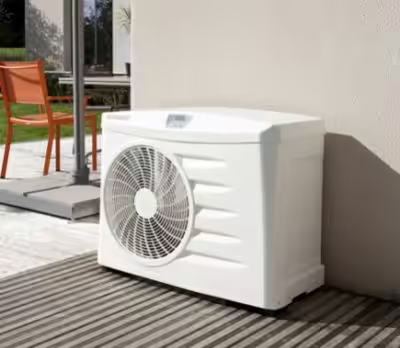
How to choose your swimming pool heat pump
 Choosing a heat pump for your swimming pool can be complicated. Despite often high prices, this device is essential for extending the swimming season. Although it may seem expensive, it is important to note that its electricity consumption remains low. Thus, this purchase represents more of an investment than a simple expense. Nevertheless, it is crucial to consider several criteria before selecting the heat pump suitable for your pool.
Your personal criteria
The choice of a pool heat pump should not be made at random. First, you should examine the characteristics of your pool: dimensions, water volume, and pool type (such as an Above-ground pool, for example). Next, determine your needs, meaning the temperature you want to reach and the planned duration of use (all year round or only during the cold season). Also consider the average temperature of your region, as this will help you assess your specific needs and select the right equipment.
Aspects to examine for the selected pool heat pump model
Once your needs are identified, you will be ready to explore the options available on the pool heat pump market. Before making your decision, be sure to check the following elements:
The volume of heated water
The volume of water treated by the pump must be consistent with that of your pool. Don’t forget to also examine the pump’s flow rate.
Noise produced by the device
It is important to consider the noise level of the device. Indeed, these devices generate noise pollution; therefore, be sure to know their decibel level and choose an installation location taking into account your house and that of your neighbors.
The heat pump power
This is a criterion that may seem complex, but it is essential. The power of a heat pump is reflected by the power consumed and the power output, which is the energy consumed versus the energy delivered to heat the water. The ratio between these two powers determines the COP, or coefficient of performance. This coefficient will inform you about the time required to heat your pool water; a higher COP indicates better energy efficiency.
The heat exchanger
This element is crucial for the operation of the heat pump and ensures a direct link with the water treatment. If you opt for salt electrolysis, choose a heat pump with a titanium or PVC exchanger. Otherwise, a stainless steel exchanger will work just as well.
Label and aesthetics
A label certifies that the equipment complies with current standards. It is recommended to choose a heat pump that meets these quality standards. Regarding aesthetics, you can choose between a horizontal or vertical model. The performance is identical, so this choice will depend on your design preferences.
These are the main criteria to consider. Obviously, other models feature other characteristics such as a defrost function or a rotary compressor; it is up to you to decide if these elements should be added to your selection criteria depending on your pool and your environment.
 Tablier PVC seul
 Coffret Alimentation 24V Hors Sol
 Coffret Alimentation 24V Immergé
 Contacteur à clé
 Télécommande
 Bouchon à coller PVC
 Capuchon de lame PVC
 Sangles et attaches de piscine
 Turbine de nage – Intégrée
 Turbine de nage – Saillie amovible