


All our articles
Pool winterizing: errors to avoid
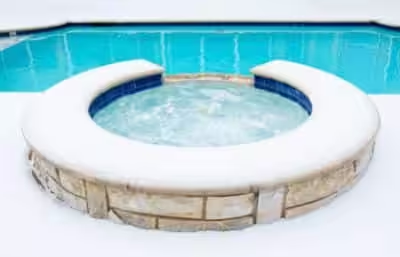
Common pool winterizing mistakes
⟨1/⟩
Only indoor pools or above-ground self-supporting structures can skip winterization. All other swimming pools require winterizing to guarantee minimal maintenance during winter, protect the pool and its equipment from frost, and facilitate a quick and safe restart as soon as warm weather returns. You can choose dynamic (or “active”) winterizing if you run the filtration system for a short period each day, or passive winterizing by stopping the filtration and covering the pool. In any case, do not overlook this crucial process and avoid the most common mistakes.
List of mistakes to avoid
Draining the pool completely:
Although this might seem logical since the pool is not in use, it would lead to serious damage to the pool structure. Indeed, the pressure from the surrounding ground – no longer balanced by the weight of the water in the pool – could cause the walls to collapse and lead to deformations or cracks in the lining. Also, be aware that the ten-year warranty stipulated in the contract with your builder no longer applies if you completely drain your pool.
Neglecting pool cleaning:
It is imperative to thoroughly clean the pool before proceeding with winterization. Regular maintenance of the filter, walls, and skimmer baskets will help you reduce dirt accumulation in the pool during winter and will make spring cleaning easier! Before restarting, a water check will determine the treatments required before any swimming.
Poor choice of winterizing dates:
Winterizing should ideally be done when the water temperature is between 12°C and 15°C. By winterizing too early, you risk a proliferation of bacteria and algae that thrive at higher temperatures. You will then have to fix cloudy water in the spring. Conversely, if you wait too long, your pool could be exposed to the first early frosts. For the same reasons, it is recommended to wait until temperatures stabilize between 12 and 15 degrees, without exceeding them, before putting the pool back into service.
Using a bubble cover:
This type of cover is not suitable for winterizing. Opt instead for a winter cover, a shutter, or a bar cover. Your pool will be better protected, you will prevent dead leaves and other debris from accumulating at the bottom, and you will limit algae growth thanks to the opacity of the cover. Also note that some covers comply with NF P90 308 standards and secure your pool during winter. For active winterizing, a mesh cover is recommended to protect your water.
Neglecting the winter treatment:
A bactericidal winterizing product is crucial to prevent the growth of algae and bacteria during winter. It will take over from your usual treatment while preventing lime deposits, and will guarantee the stability of water quality during the cold season.
Ignoring frost risks:
If you live in a region prone to frost in winter, you must provide certain accessories (gizmos, floats, winterizing plugs) and completely drain the water from the filtration circuit before winter. It is also necessary to lower the water level in the pool below the return jets and the vacuum port to prevent these elements and the pipes from freezing (except in the case of active winterizing where a sufficient water level must be maintained for the filtration to work). Pipe insulation is also advised.
 Tablier PVC seul
 Coffret Alimentation 24V Hors Sol
 Coffret Alimentation 24V Immergé
 Contacteur à clé
 Télécommande
 Bouchon à coller PVC
 Capuchon de lame PVC
 Sangles et attaches de piscine
 Turbine de nage – Intégrée
 Turbine de nage – Saillie amovible