


All our articles
Above Ground Pool: Frequently Asked Questions & Answers
“`html
In this article, we answer the most common questions about above-ground pools. You will find useful information to help you understand the various aspects of installing, maintaining, and using these pools. Whether you are planning to purchase an above-ground pool or want to improve your experience with an existing model, this article offers practical advice to make the most of your above-ground pool.
How do I install an Above-Ground Pool?
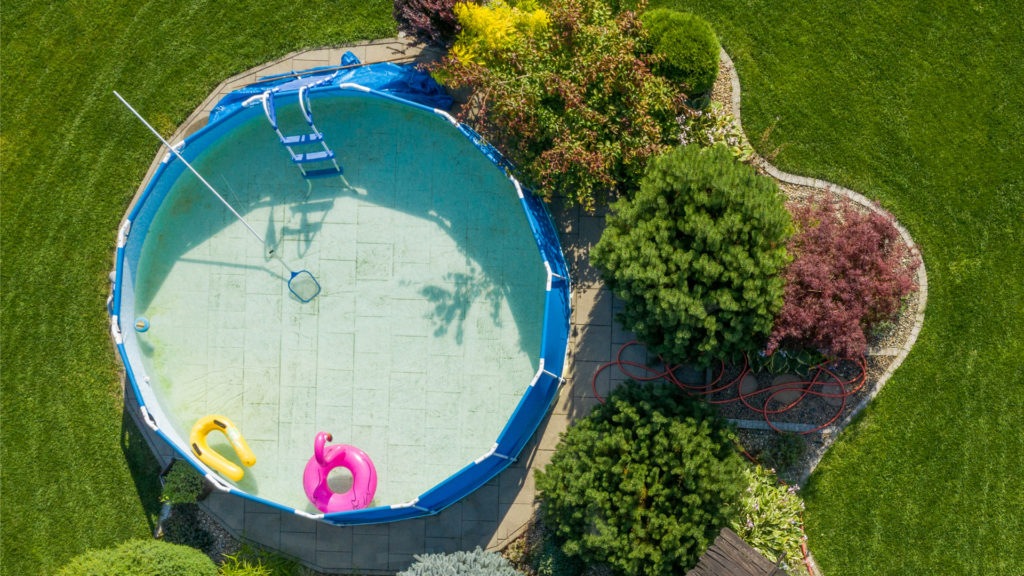
Setting up an above-ground pool is an accessible project that requires organization and care. First, it is essential to select a suitable location, which is sunny, level, and close to a water source as well as an electrical outlet. After choosing the location, prepare the ground by removing all debris, leveling the surface, and compacting it correctly.
Assemble the pool by following the manufacturer’s instructions: spread out the liner, assemble the frame, and adjust it to remove wrinkles. Once this step is completed, first fill the pool partially to allow for final liner adjustments, then fill to the appropriate level. Next, install the essential components, such as the pump, filter, safety ladder, and a cover to prevent the water from being contaminated.
Finally, check and adjust the pH and chlorine levels to ensure clear and healthy water. By following these guidelines, you can enjoy your above-ground pool with peace of mind and safety.
Can an above-ground pool be installed on sand?
⚠️ Before installing your above-ground pool on a sand base, make sure your model is suitable for this type of surface. (Information mentioned on all our product sheets)
Yes, it is possible to install an above-ground pool on sand (if your model allows it) by following several important steps to ensure a stable and durable installation.
- First, choose a flat site, well-exposed to the sun and away from trees to avoid falling debris.
- Remove rocks, roots, and other impurities. Lay a 5 to 10 cm layer of sand over the entire surface. Prepare the ground before starting.
- Spread the sand evenly using a rake. Afterwards, use a straight board and a level to check that the surface is perfectly flat.
- Compact the sand to prevent it from shifting once the pool is filled.
- Protect the liner of the pool by placing a heavy-duty tarp or ground cloth on the sand. This will reinforce the stability of the pool.
- Follow the manufacturer’s instructions.
- Begin to fill the pool and adjust the liner progressively to remove wrinkles. Continue until the recommended level is reached.
“““html
To assemble the pool, unfold the liner and remove all creases.
By following these instructions carefully, you can install your above-ground pool on sand safely and effectively.
What material should be used under an above-ground pool?
The ground under an above-ground pool should be selected based on its strength, its ability to protect the liner, and to facilitate drainage. The most common materials include sand, specific protective tarps, felt or polyethylene mats, as well as slabs or pavers.
It is essential to ensure that the ground is well-leveled, compacted, and free of any objects that could damage the pool liner.
Is it possible to bury an above-ground pool?
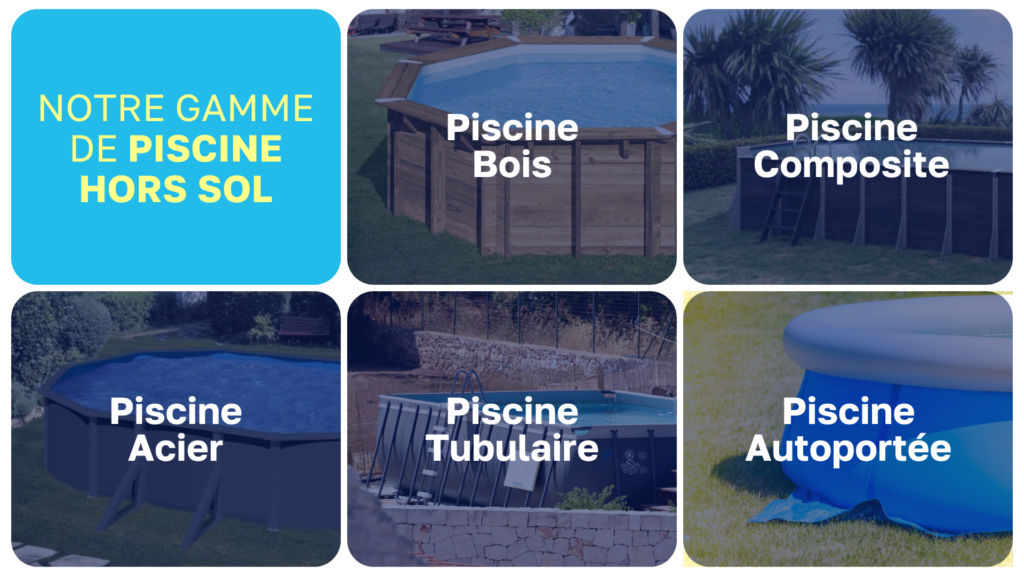
Steel pools or tubular models cannot be buried. Only wooden or composite above-ground pools can be semi-buried or completely buried, but this requires specific measures to guarantee its longevity and safety.
⚠️ Make sure that your pool model is suitable for inground installation. Some structures are not robust enough to withstand the pressure of the surrounding soil.
For this type of installation, it is crucial to install a drainage membrane to protect the walls by allowing water to flow away.
What water level should my above-ground pool have?
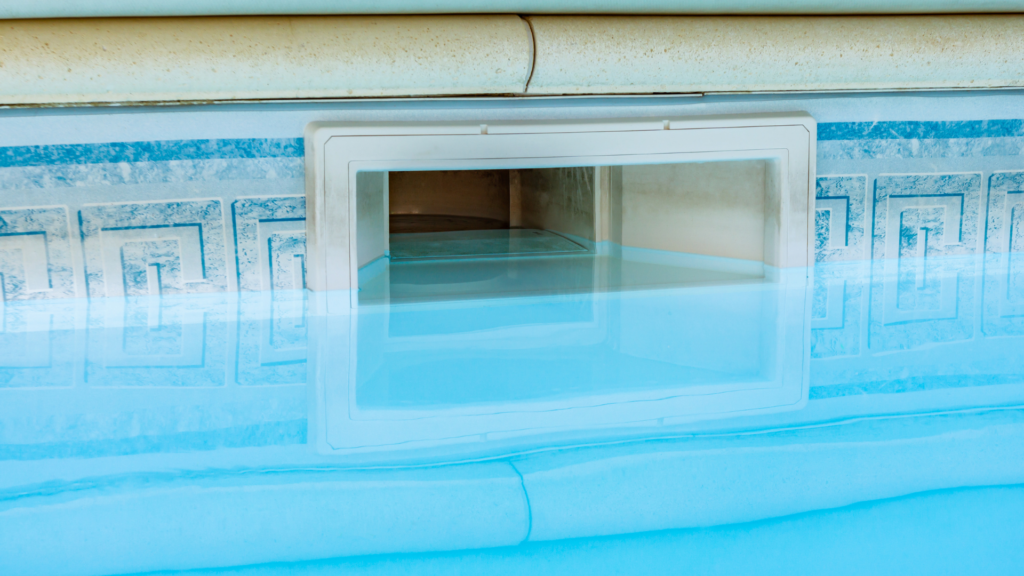
For filling, it is essential to base it on the position of the skimmer. The water should reach the middle of the skimmer. On most tubular above-ground pools, a white line indicates the level to reach when filling.
When should I set up an above-ground pool?
The perfect time to set up an above-ground pool varies depending on several factors. This includes your region, weather conditions, as well as your own preferences.
In general, spring and early summer bring more pleasant temperatures, which makes installation easier. This gives you the opportunity to fully enjoy your pool during the upcoming hot months.
It is recommended to prepare your pool before the arrival of intense heat, as this will allow you to cool off as soon as the heat becomes overwhelming. This will help you avoid potential delays due to high demand during the summer.
It is wise to plan your pool installation in advance. Make sure you have all the required equipment and book installation services if necessary. It is also crucial to have dry, solid ground, especially if you are installing the pool on sand or grass.
How to take care of an above-ground pool in winter?
Maintenance of your pool in winter largely depends on the model you own:
- For wooden, galvanized steel, and composite pools, you can leave them outside during the winter. To do this, perform proper winterization when the water temperature is between 12°C and 15°C. This ensures a protection against frost and potential damage.
- It is advisable to dismantle tubular and freestanding pools during the winter. They should then be stored in a dry and protected place, preferably in their original packaging. This method helps protect the pool from the elements and extend its durability.
How to prepare an above-ground pool for winter?
There are two main overwintering methods for above-ground pools: active overwintering and passive overwintering.
- Active Overwintering : This method consists of maintaining water circulation as well as minimal filtration during the winter. Although the pool is used less, the pump operates periodically to avoid
water stagnation. Chemical substances are added regularly to keep the water clean and balanced, consequently reducing the need for deep cleaning in the spring.
- Passive Overwintering : This method is more common, especially in areas where winters are harsher. In this case, the pool is completely shut down. All equipment is removed, the water is lowered to a safe level, and the pipes are emptied to prevent damage due to frost. A protective cover is put in place to prevent the accumulation of debris and protect the liner. This approach generally requires less maintenance during the winter but requires more significant start-up work in the spring.
The choice between active and passive overwintering often depends on the preferences of the pool owner as well as local climate conditions. Pools located in warmer regions can benefit from active overwintering to maintain better water quality. In cold areas, opt for passive overwintering to protect your equipment from frost and prevent damage.
What maintenance products for my above-ground pool?
The use of substances containing chlorine, pH regulators, and algaecides is crucial for keeping your pool water clean. It is necessary to maintain an adequate level of chlorine to prevent algae growth and water contamination. This is vital for the health of the pool.
In addition to avoiding skin irritation, a good chlorine level helps preserve your pool equipment.
How to heat an above-ground pool?
To heat an above-ground pool, several solutions are available to you to extend the swimming season. Solar heating systems use serpentine mats to heat the pool water, while heat pumps pull heat from the ambient air to warm the water. Gas or propane heaters represent a fast and efficient option, suitable for medium to large-sized pools.
Additionally, using an insulating cover in combination with a bubble cover for above-ground pools when the pool is not in use can help retain water heat, thus reducingheating costs and water evaporation (it is recommended not to leave the cover on during the day, but rather at night to retain the heat accumulated during the day).
The heat exchangers can also be integrated into an existing central heating system to transfer heat to the pool water.
By selecting the method best suited to your needs and budget, you will be able to enjoy a pleasantly heated pool, even when temperatures are cooler.
How to drain an above-ground pool?
To drain your above-ground pool safely and efficiently, a few simple steps are necessary. First, make sure to unplug all electrical appliances, such as the pump and filter. Then, prepare the pool’s drainage system or use a submersible pump or a garden hose to drain the water.
It is fundamental to drain the pool slowly to avoid any structural damage caused by excessive pressure on the walls. During this process, monitor closely to ensure everything is going smoothly.
Once the pool is empty, feel free to clean the walls and the bottom, and to perform any necessary maintenance. By following these steps carefully, you can drain your pool off…
“`
Preparing the ground for an above-ground pool is essential, both to preserve its layout and to maintain its cleanliness.
Do you need to declare an above-ground pool?
As a general rule, installing an above-ground pool is relatively easy from an administrative standpoint. However, certain specific situations may require additional steps.
For example, building a pool with a surface area greater than 10 m², whether it is above-ground, semi-inground, or inground, might require a prior work declaration to the municipality. In addition, if your residence is located in a historical or protected zone, you may need a specific authorization.
For specific information regarding the legal requirements in your area, it is advisable to contact your local town hall or explore online government resources.
👉 Service-Public.fr: Installation or construction of a private swimming pool
By following local regulations and recommendations, you can enjoy your pool without complications. Stay informed to avoid any potential issues. For more information on administrative procedures related to pool installation, do not hesitate to consult our dedicated article.
Before starting your project: everything you need to know about above-ground pools
Do you dream of having a swimming pool in your garden to enjoy beautiful days and relax with family or friends? Above-ground pools are a perfect solution to make this dream a reality quickly and simply. Before starting, it is essential to clearly identify your needs and choose a pool that fits your requirements. Our dedicated article will advise you on the best time to purchase your pool, potential work to consider, and more.
👉 Above-Ground Pool: Everything you need to know before starting your project
 Tablier PVC seul
 Coffret Alimentation 24V Hors Sol
 Coffret Alimentation 24V Immergé
 Contacteur à clé
 Télécommande
 Bouchon à coller PVC
 Capuchon de lame PVC
 Sangles et attaches de piscine
 Turbine de nage – Intégrée
 Turbine de nage – Saillie amovible