
Uncategorized

How to clean your pool effectively

volet de piscine immergé

How to properly maintain your swimming pool

How to clean your pool effectively

Do you own a pool but don't know how to maintain it? Don't panic, this guide is for you!

planning entretien piscine

Important information!

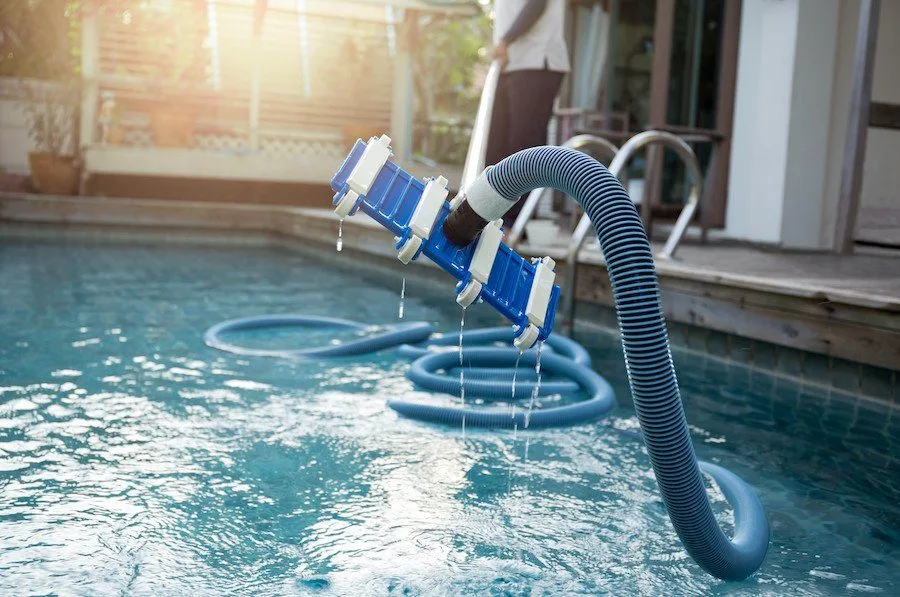
  • Weekly maintenance: Regular cleaning is essential to maintain clean and healthy water.
  • Adaptation to conditions: Adjust maintenance according to water and air temperature, as well as pool usage. In hot weather or heavy use, it may be necessary to increase filtration and disinfection.
  • Filtration: Filtration is the key to crystal-clear water. Clean skimmers, check the pump, and wash the filter (sand, cartridge, or DE) regularly.
  • Disinfection: Use chlorine, bromine, or a salt electrolyzer to eliminate bacteria and algae. Test the pH and adjust it between 7.2 and 7.6 for optimal treatment effectiveness.

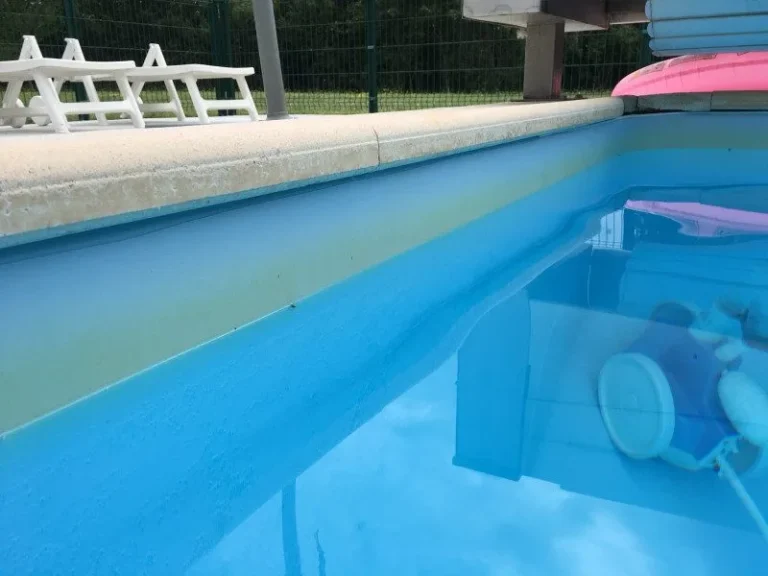
What is the waterline and how does it appear?

The waterline of your pool is like a real "deposit zone" where limescale, sunscreen, greasy residues, and pollution accumulate, especially under the effect of the sun. To prevent it from becoming dirty and difficult to clean, it is important to maintain it regularly.

To solve this problem, use specific products that are gentle and solvent-free, so as not to damage the membrane or the lining of your pool. Frequent wiping with a sponge helps keep a clean and impeccable waterline!

ligne deau jaune
Comment entretenir sa piscine 2

How do I know if the water I use is good?

It is essential to know where your pool water comes from and what it contains.

  • If it comes from the public network, no worries! It already meets quality standards.
  • On the other hand, if you use water from a borehole, a catchment, or a well, it is better to have an analysis done before pouring it into your basin. It could contain too many minerals, iron, or other elements that can cloud the water or clog your installation. A simple test avoids unpleasant surprises and allows you to enjoy clear, balanced water.

How to protect your pool?

If the temperature exceeds 10°C, you should never leave your pool without treatment, whether chemical or physical; otherwise, you risk having stains that are difficult to remove. If you stop filtration during the winter, don't forget to add a special winterizing product, which will help prevent algae formation and limescale buildup. A winter cover, which lets as little light and dirt as possible through, is also essential to protect the water during the cold season. In summary: keep your pool well protected, even in winter!

How to treat the water?

When you fill your pool for the first time, it is crucial to add a metal sequestrant (A pool metal sequestrant is a chemical product that binds to metals dissolved in the water). This helps prevent the appearance of stains caused by the presence of dissolved metals such as copper, iron, or manganese.


Use of treatment products
  • Most flexible linings are compatible with common products on the market.
  • Certain chemical mixtures can be dangerous. Always follow the manufacturer's recommendations indicated on the packaging.
  • Strict prohibition: Copper sulfate and its derivatives, as well as treatments containing copper (e.g., multi-function chlorine tablets), must never be used.


Water balance and treatment compatibility
  • Maintain a pH between 7 and 7.6 to ensure effective treatment and protect equipment.
  • If you use a treatment other than chlorine (chemical or electrophysical), always check its compatibility with PVC membranes with the supplier.


Precautions for using products
  • Unwrapped solid products based on chlorine or bromine must be pre-dissolved, ideally in a feeder, skimmer, or pre-filter.
  • Never mix several products without professional advice to avoid any chemical risk.
  • A shock treatment requires prior dissolution or the use of a system promoting rapid dissolution.


Filter maintenance
  • Remember to change the filter sand load every 5 years minimum, and imperatively when replacing a liner. This guarantees good filtration quality and effective water treatment.

Discoloration or blistering may appear around accessories (skimmers, main drains, return inlets) if the operating instructions are not followed. This does not indicate a defect in the membrane, but rather a chemical imbalance in the water.

Why do stains appear in the pool?

yellow algae in pool


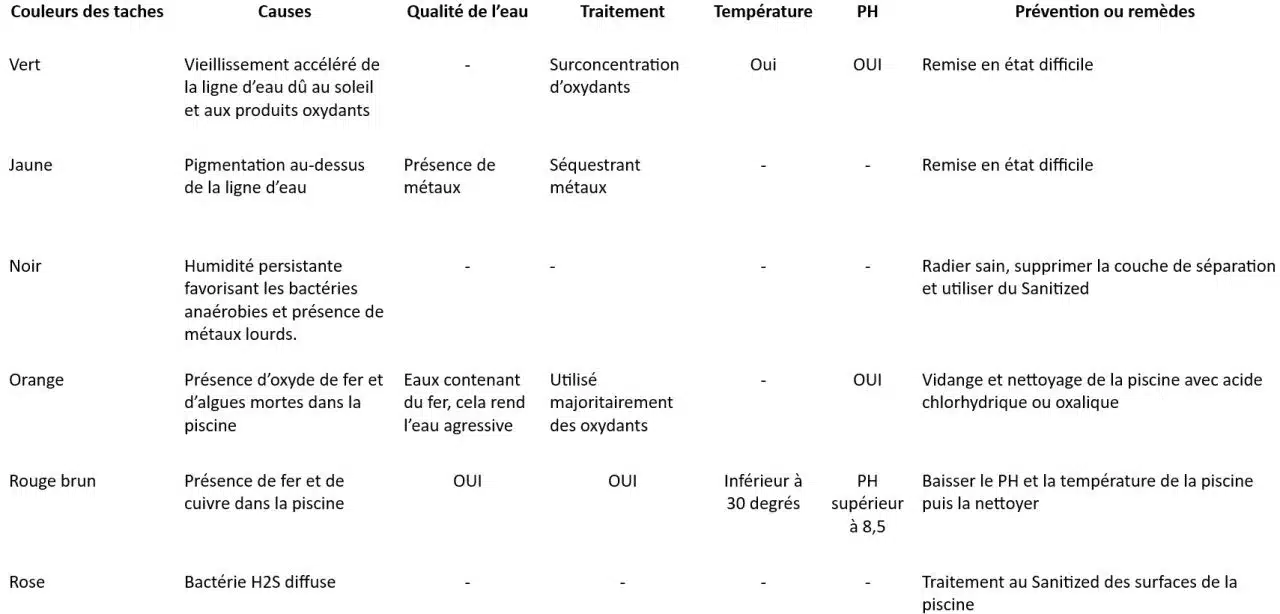
It is possible to observe stains of different colors on the liner. The table below helps you understand their origin by detailing the color, causes, influencing factors, as well as possible solutions and prevention. In any case, the installation, replacement, use, and maintenance of PVC-P liners for in-ground pools must follow the AFNOR NF T 54-802 standard.

What do the stains correspond to and how to treat them?

Tableau taches