


All our articles
Restarting a Swimming Pool After Passive Winterizing
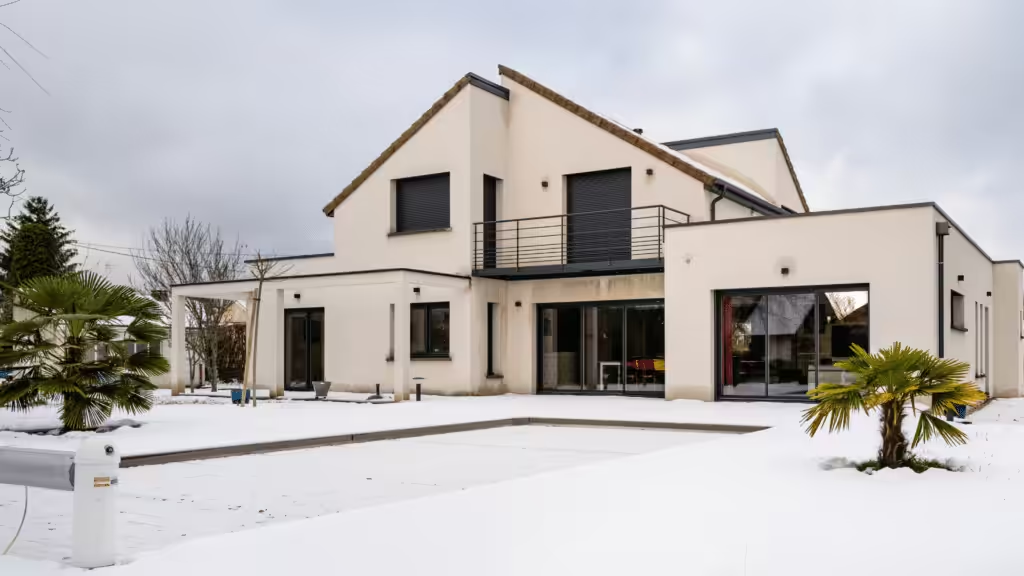
The passive wintering process consists of preparing the pool for the cold season by stopping all systems and protecting the structure against freezing. This includes meticulous cleaning, water treatment, lowering the water level, draining the equipment, and installing a winter cover. This method protects the pool from winter damage and simplifies its reopening in the spring.
In this article, you will discover all the crucial steps to restart your pool after passive wintering.
Complete Guide to Making Your Pool Operational After Passive Wintering
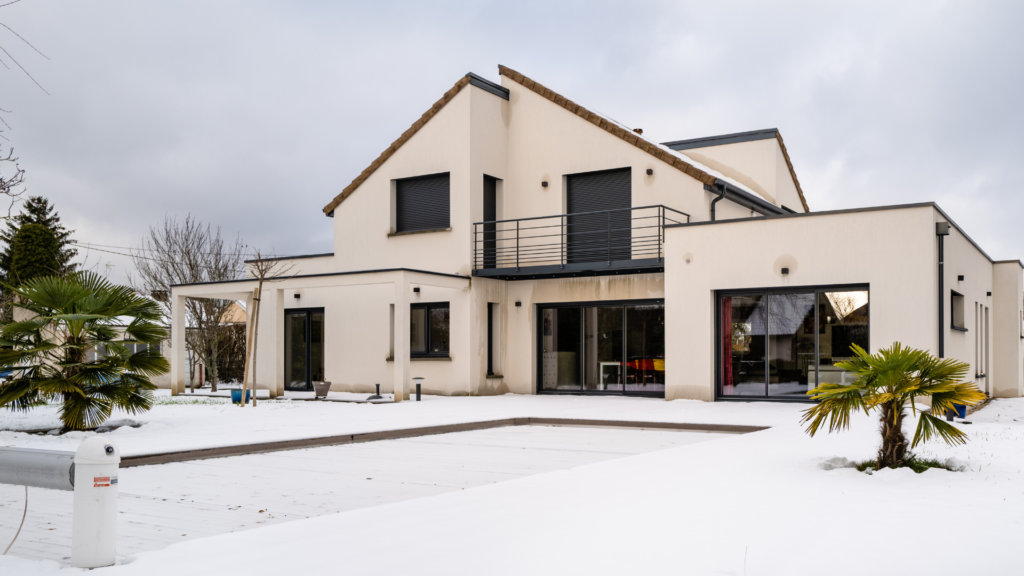
#1 Pool with automatic slatted cover: Open the cover and clean the slats using a water hose (avoid using a pressure washer to prevent damaging the cover).
#2 Standard winter cover : Remove the cover, clean it meticulously with a water hose. Once it is dry, fold it and store it in a dry place.
#3 Skimmers and nozzles: Remove the gizzmos from the skimmers as well as the plugs from the return nozzles and vacuum points. Also remove the line of winterizing floats.
#4 Filling the basin : Fill the pool until the water level reaches halfway up the skimmers.
#5 Filtration: Restore the operation of the filtration pump and perform a backwash of the sand filter.
#6 Diatomaceous earth filter: Open the filter, remove and clean each element with a water hose. Reassemble all parts and close the filter.Refill it with diatomaceous earth according to the instructions on the filter packaging.
#7 T.A.C Check : Measure the T.A.C (Total Alkalinity) of the water, which should be between 60 and 80 ppm (6 to 8°f). An inappropriate T.A.C can cause pH instability.
#8 pH Adjustment : Adjust the water pH so that it is between 7.0 and 7.4.
#9 Salt Chlorinator : Test the salt level and add the necessary amount following your device’s recommendations. Consult the user manual for precise values.
💦 Note : To increase your salt level by 1 g/L, add 3 kg of salt for every m³ of water.
#10 Once your water parameters are adjusted, perform a shock chlorination, unless your pool uses BIGUANIDE (PHMB) or active oxygen.
💡 Don’t forget to turn off all automatic treatment devices, such as… salt chlorinators, pH regulators, and copper/silver disinfection systems, during the shock chlorination treatment.
#11 Wait 48 hours after the chlorine shock. Then, carry out a maintenance treatment using either slow-release chlorine tablets or by reactivating your automatic disinfection system (electrolysis, redox regulator, UV lamp, or copper/silver treatment).
⚠️ Alert: only activate your chlorinator when the pool water temperature is above 15 °C. Otherwise, you risk irreversibly damaging your device’s cell.
#12 If you have an automatic pH regulation device: calibrate the probe with a new buffer solution (refer to the device manual). If an error occurs during calibration, check that the probe is properly connected. If the error continues, it indicates that the probe is at the end of its cycle and must be replaced. Also, be sure to check the amount of corrective product available in your pH container.
#13 Clean the water line with a product specifically designed for this purpose.
The restart of your swimming pool is now complete. You can now relax while waiting for the arrival of sunny days. When the sun arrives, you will then be able to fully enjoy your pool and create unforgettable memories through your swimming and moments of relaxation.
 Tablier PVC seul
 Coffret Alimentation 24V Hors Sol
 Coffret Alimentation 24V Immergé
 Contacteur à clé
 Télécommande
 Bouchon à coller PVC
 Capuchon de lame PVC
 Sangles et attaches de piscine
 Turbine de nage – Intégrée
 Turbine de nage – Saillie amovible