


All our articles
Cleaning the swimming pool water line: tips
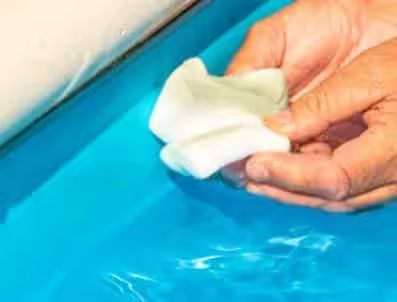
How to clean your pool water line
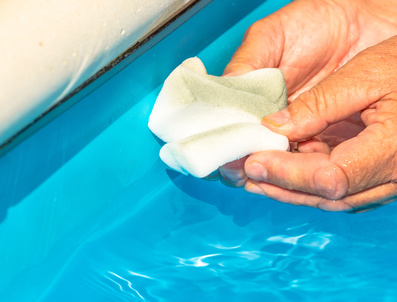
The water line is the part of the pool lining where dirt, due to the movement of the water, tends to settle first. This dirty area is a frequent concern for pool owners: more or less visible depending on the shade of your lining, it can become embedded and permanently mark the liner if regular cleaning is not performed.
What are the reasons for a dirty water line?
A soiled water line is formed due to several combined factors:
- pollution that settles on the water surface: barbecue smoke, algae, dust, pollen
- limescale deposits that become encrusted on the walls in the absence of care
- weather conditions: heavy rain, winds, sun exposure
- the presence of fatty substances (suntan oils, combustion residues) which will gradually clog the walls at the water level
These elements will encourage the appearance of a contrasting yellow, black, or brown mark at the water line. Initially subtle, then increasingly obvious if you do not take care of it, it could become indelible and leave a mark on your pool lining, especially since the sun, by slightly bleaching the most exposed areas of the liner, will contribute to the formation of a visible demarcation.
Why does dirt concentrate on the edges of the pool?
If you are wondering about this, know that your pool’s filtration system collects various impurities through the movement of the water. The circular movements created by the mechanism drive debris toward the pool walls.
How to clean your water line?
To maintain a clean water line and avoid the appearance of marks on the pool walls, two actions are necessary. First, you must monitor the water quality to prevent excessive hardness or the presence of copper sulfate, and remove floating elements in the pool (insects, plant debris, etc.) daily with a net. Next, it is essential to clean the water line regularly. A weekly brushing is a good rhythm, but you should adjust the frequency according to exterior conditions, weather, the number of swimmers, and observed plant pollution.
First method: manual cleaning
There is no mystery: only gentle but regular brushing will prevent the water line from getting dirty. You can use a specialized brush, a sponge, a microfiber cloth, or a cleaning eraser; the important thing is to proceed with care so as not to damage the lining. If you wish to use a cleaning product to make the task easier, make sure to choose a suitable detergent that is safe for your skin and water quality, or opt for an ecological cleaning stone (Pierre d’Argent).
Second method: robotic cleaning
If your pool robot has this function, you will save time cleaning the water line and avoid using expensive maintenance products. However, be aware that a robot will clean surfaces with less care, without focusing on areas that may be encrusted. Supplement this cleaning with regular manual maintenance to combine efficiency and time savings!
It is crucial to perform a complete pool cleaning before the start of the season.
Finally, keep in mind that the fight against a dirty water line is a long-term commitment: the more regular you are, the faster and easier the maintenance will be.
 Tablier PVC seul
 Coffret Alimentation 24V Hors Sol
 Coffret Alimentation 24V Immergé
 Contacteur à clé
 Télécommande
 Bouchon à coller PVC
 Capuchon de lame PVC
 Sangles et attaches de piscine
 Turbine de nage – Intégrée
 Turbine de nage – Saillie amovible