


All our articles
The utility of a pool thermometer
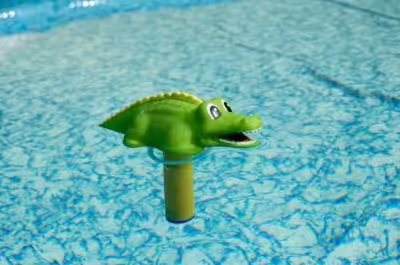

A pool thermometer is not just an accessory for measuring the water temperature, and therefore the desired swimming comfort, before entering the water. It is also an essential tool for monitoring the proper functioning of the pool’s heating system, and for adjusting the maintenance and filtration of the pool based on the temperature.
Whether you have an indoor, covered, or outdoor pool, whether it is above-ground or in-ground, a thermometer proves necessary to preserve swimming comfort and optimal water quality.
To measure the water temperature, it is necessary to submerge the thermometer in the water. The temperature indeed varies between the surface and the depths. A reliable measurement must therefore be taken at least 10 cm below the surface.
Water temperature, a crucial factor for swimming comfort
It is always wise to check the water temperature before diving in. In a pool, the temperature can fluctuate rapidly, and it is better to assess the comfort level before entering. This will allow you, if the water is cold, to acclimatize gradually or activate the heating system before your swim!
- Below 23°C (73°F), swimming is possible but should remain brief: the body cools down quickly, especially during moderate activity. Pay attention to children and sensitive individuals whose thermal regulation system is less efficient: shorten the time in the water and dry off thoroughly upon exiting.
- Between 23°C and 26°C (73°F-79°F), it is already more pleasant. This is generally the temperature of the Mediterranean, but in a pool, it is more suitable for swimming laps than for a prolonged soak.
- Between 27°C and 29°C (81°F-84°F), it’s ideal! Both refreshing and pleasant, this temperature allows you to enter the water easily and stay there for a long time without feeling the cold.
- Beyond 30°C (86°F), however, even if it may seem pleasant, it is considered too warm. The water no longer refreshes sufficiently and water quality can quickly degrade.
Hygiene and maintenance
Water that is too warm (>30 degrees) is harder to maintain. Chemicals work less effectively, bacteria and algae multiply more rapidly, and the water quality can quickly change. This is why it is essential to regularly monitor the water temperature using a thermometer, in order to adjust treatments accordingly.
Filtration time must also be adjusted based on the pool temperature. The warmer the water, the longer the filtration time should be. In some cases, continuous filtration is even recommended.
 Tablier PVC seul
 Coffret Alimentation 24V Hors Sol
 Coffret Alimentation 24V Immergé
 Contacteur à clé
 Télécommande
 Bouchon à coller PVC
 Capuchon de lame PVC
 Sangles et attaches de piscine
 Turbine de nage – Intégrée
 Turbine de nage – Saillie amovible